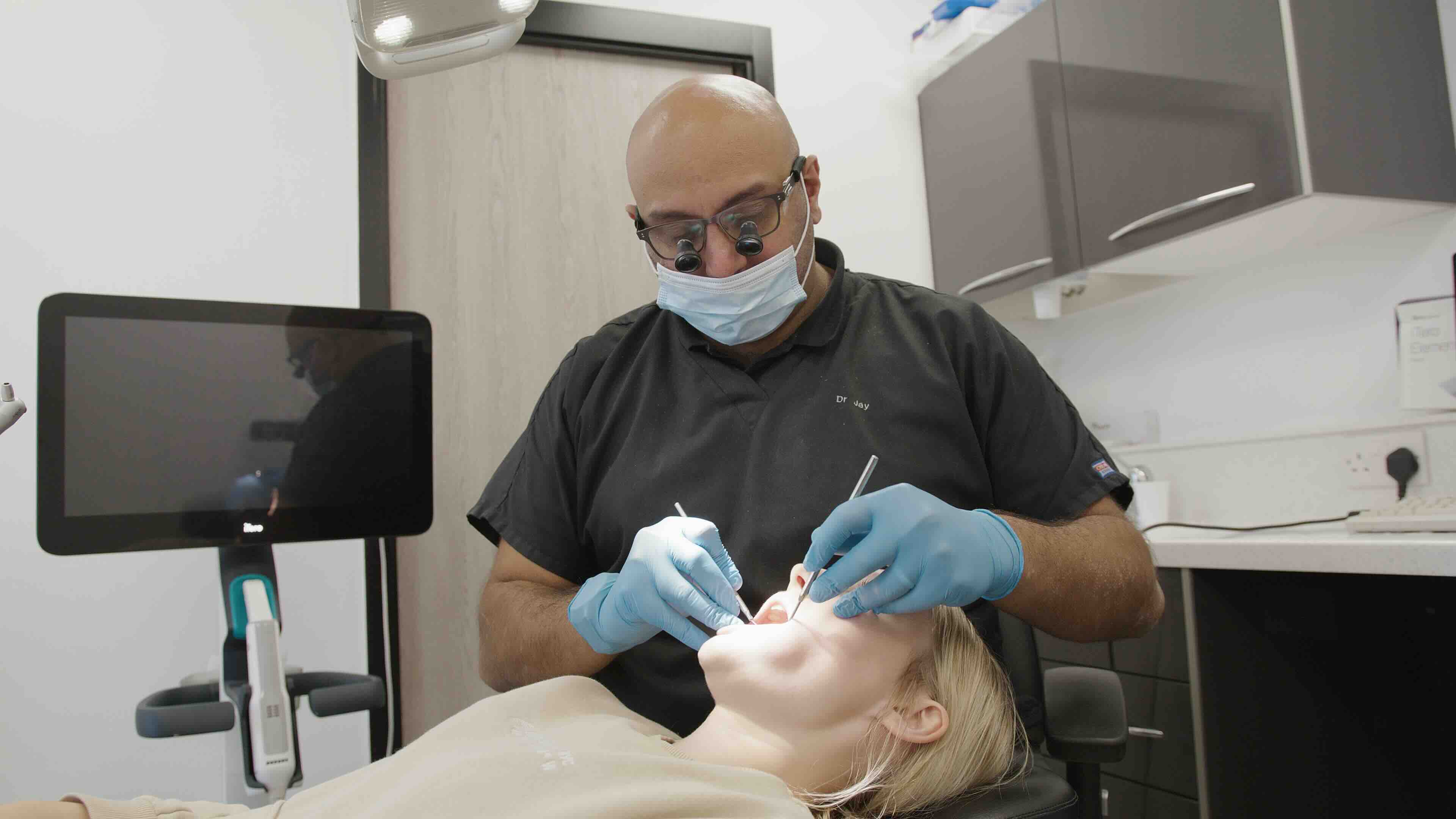
Most adults with missing teeth can have dental implants. The main requirements are enough healthy jawbone to hold the implant, healthy gums, and good general health.
The only way to confirm if you qualify is a clinical exam and 3D CBCT scan. The scan shows your exact bone volume in 3 dimensions. X-rays cannot show bone width.
At Lotus Dental Studio in Llanelli, we assess patients from Swansea, Cardiff and Carmarthen to check if dental implants are suitable. If you’re not a candidate today, we explain why and discuss alternatives like bridges or dentures.
5 Requirements for Dental Implant Candidates
These are the standard factors dentists check. Speak to your dentist to confirm your situation.
1. Adequate jawbone volume
The implant needs bone to fuse with. After a tooth is lost, the jawbone can shrink over time. A 3D scan measures if you have enough height and width. If bone is low, a bone graft may rebuild it before implant placement.
2. Healthy gums
Active gum disease needs treatment first. Healthy gums help implants last. We check for signs of infection or inflammation.
3. Good general health
Certain medical conditions and medications affect healing. Diabetes must be controlled. We review your medical history with you.
4. Non-smoker or willing to reduce
Smoking increases the risk of implant complications and failure. If you smoke, we’ll discuss the risks and options.
5. Commitment to oral hygiene
Implants need daily brushing and flossing like natural teeth, plus regular dental checks. This helps prevent problems.
If you don’t meet all 5 today, treatment may still be possible after addressing issues like gum disease first.
How We Check If You’re a Candidate at Lotus Dental Studio
1. 3D CBCT scan on site
We take a 3D scan to measure bone volume and check nerve positions. You see the results with your dentist.
2. Medical and dental history review
We discuss your health, medications and smoking status. This is standard practice for implant assessment.
3. Gum examination
We check for gum disease and measure stability of remaining teeth.
4. Written options
After assessment we give you a written plan. This sets out if implants are suitable, if grafting is needed, and alternative options with costs.
Common Reasons Implants May Not Be Suitable Yet
1. Insufficient bone volume
If the scan shows the jawbone is too thin or short, a bone graft may be suggested first. This builds bone over several months.
2. Active gum disease
Gum disease must be treated and stable before implant placement to reduce infection risk.
3. Uncontrolled medical conditions
Conditions like uncontrolled diabetes can affect healing. Once controlled, implants may be possible.
4. Smoking
Smoking increases failure risk. We discuss this with you during assessment.
5. Jaw still growing
Implants are placed once jaw growth is complete, usually early 20s.
These factors are assessed individually. The dental implant procedure is only planned if it’s right for you.
What If Dental Implants Aren’t Right for Me?
If implants aren’t suitable, we’ll explain why and discuss alternatives:
We set out all costs in writing before any treatment starts. You choose what’s right for you.
Frequently Asked Questions
1. Is there an age limit for dental implants?
Health matters more than age. Jaw growth must be complete, so implants are usually placed in adults. Older adults can have implants if health allows. Speak to your dentist about your medical history.
2. Can I get implants if I have bone loss?
Possibly. Minor bone loss may still allow implant placement. Moderate or severe bone loss may need a bone graft first to rebuild volume. A 3D CBCT scan shows your exact bone levels.
3. Do I need to quit smoking for implants?
Smoking increases the risk of implant complications. We recommend stopping or reducing. Discuss your smoking with your dentist during your assessment.
4. Can I have implants with diabetes?
Controlled diabetes is usually acceptable. Uncontrolled diabetes affects healing. Bring details of your condition and medications to your consultation.
5. How do I know if I have enough bone?
A 3D CBCT scan measures bone height and width accurately. Standard X-rays do not show bone width. This is why we scan before confirming if implants are possible.
Book Your Dental Implant Suitability Assessment
The only way to confirm if you’re a candidate is a clinical exam and 3D CBCT scan. At Lotus Dental Studio we include:
- Full medical and dental history review
- 3D CBCT scan to measure bone volume
- Gum health check
- Written treatment plan with all suitable options
Next step: Call 01554 774509 or use our online booking system. We’re at 13 Llwynhendy Rd, Llanelli SA14 9DP.

Reviewed by Khawaja Jawad Fariduddin, BDS | Lotus Dental Studio