Reviewed by Khawaja Jawad Fariduddin, BDS | Lotus Dental Studio
If you're missing one or more teeth, dentures and dental implants are the two most common ways to restore your smile. Both work, but they work very differently, and the right choice depends on your lifestyle, budget, and long-term goals. Here's how they actually compare.
How Dentures Work
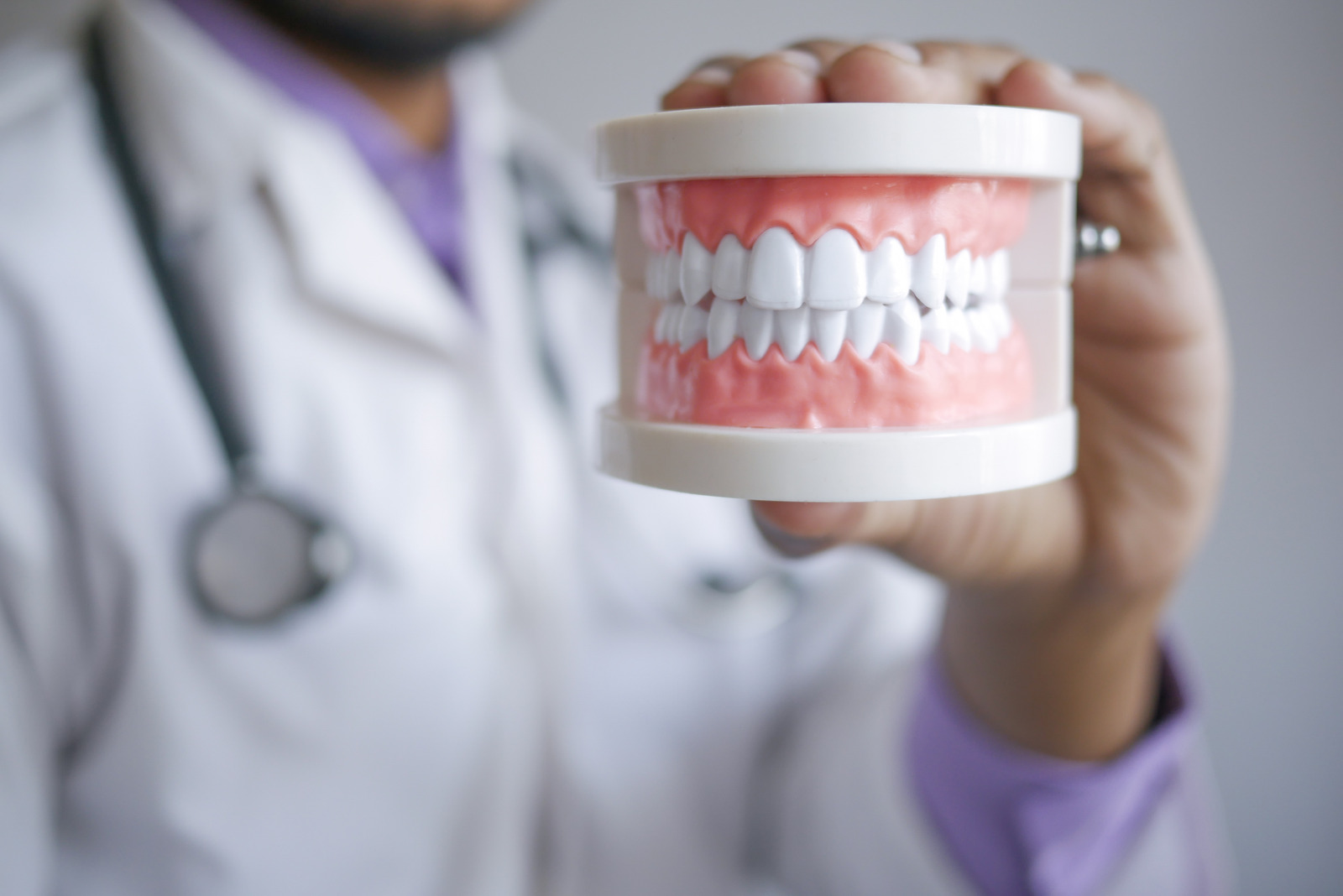
Dentures are removable prosthetic teeth that sit over your gums. They can replace a full arch of teeth or just a few missing ones, held in place with adhesive, suction, or clasps onto remaining natural teeth. They're taken out at night and cleaned separately, much like a retainer.
How Dental Implants Work
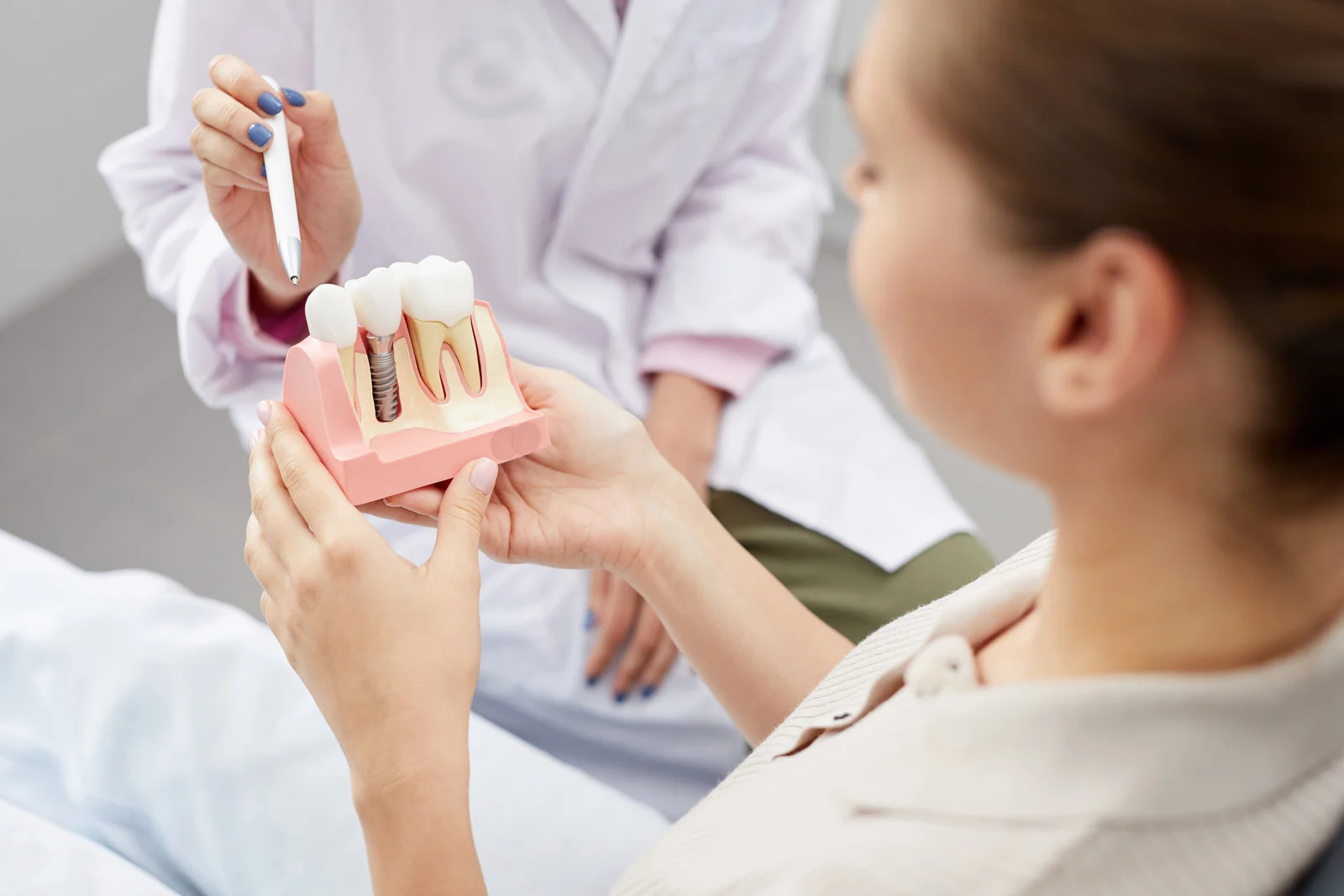
Dentist explaining a dental implant cross-section model to a patient at Lotus Dental Studio, Llanelli
Dental implants replace the tooth root itself. A titanium post is placed into the jawbone, and once it has fused with the bone, a custom crown is fitted on top. Unlike dentures, implants are fixed in place. They function, feel, and are cared for like natural teeth, with normal brushing and flossing rather than removal and separate cleaning.
Comfort and Day-to-Day Living
This is where the two options diverge most. Dentures can shift while eating or speaking, particularly as your gums change shape over time, and many people find certain foods harder to manage. Implants don't move, so there's no slipping, no adhesive, and no adjustment period for eating the foods you're used to.
How Long Do Dentures and Implants Last?
Dentures typically need relining or replacing every 5 to 8 years as your jawbone and gums change shape. Dental implants, with proper care, can last 20 years or longer, and the crown on top can be replaced if it wears down without needing to touch the implant itself.
Cost Comparison
Dentures generally cost less upfront, which makes them an accessible option for replacing multiple teeth at once. Implants have a higher initial cost, but because they last significantly longer and don't require the ongoing replacements or relines dentures often need, the cost gap narrows considerably over time.
Who's a Good Candidate for Each?
Dentures tend to suit patients who want a lower upfront cost, need to replace a full arch of teeth, or aren't candidates for surgery due to health reasons. Implants tend to suit patients with sufficient jawbone density, good general oral health, and a preference for a fixed, permanent solution. A consultation is the only reliable way to know which applies to you, since bone density and gum health both play a role.
Can You Combine Both? Implant-Supported Dentures
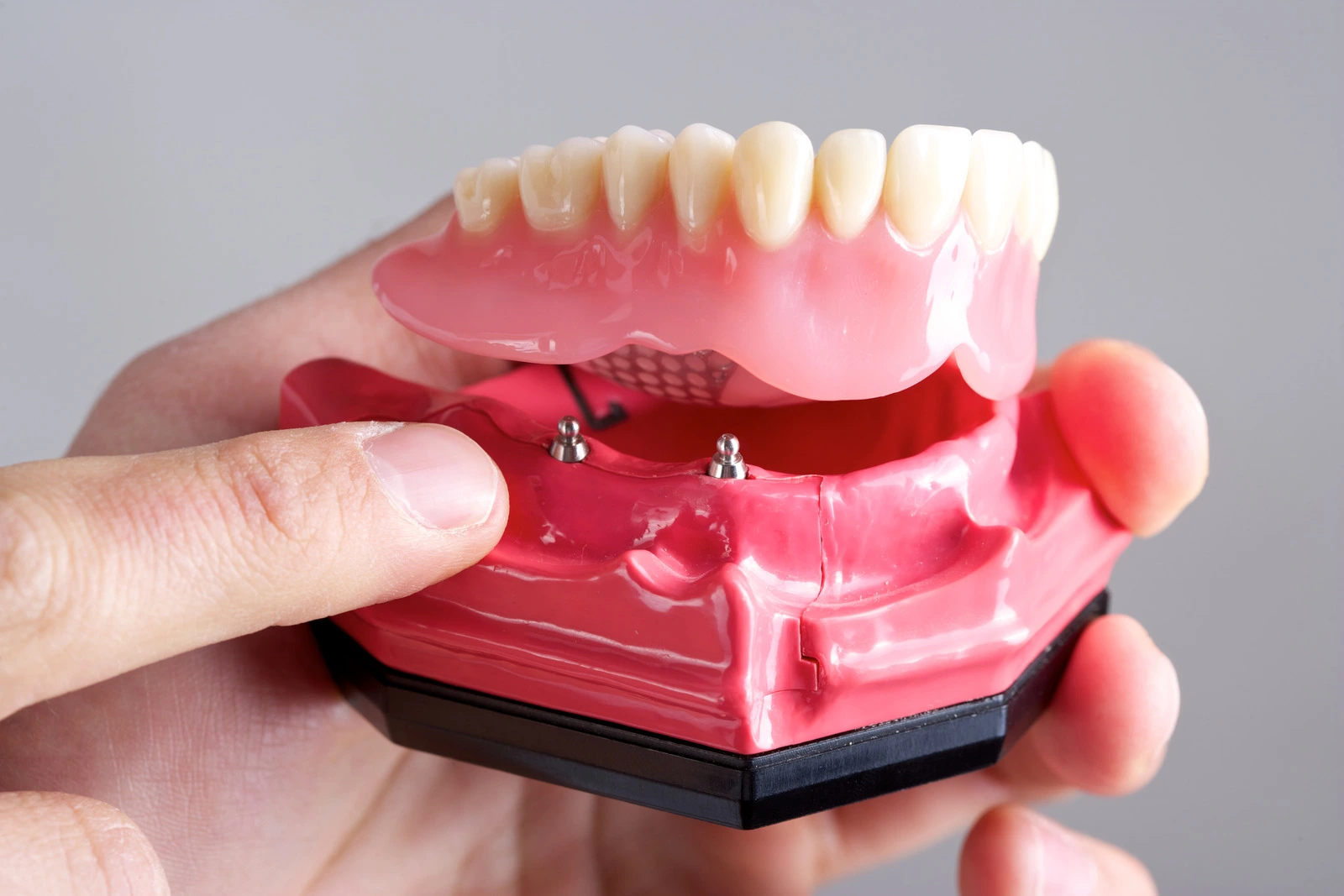
For patients who want more stability than traditional dentures but aren't looking for a full set of individual implants, implant-supported dentures offer a middle ground. A small number of implants anchor the denture in place, so it no longer shifts or requires adhesive, while keeping costs lower than replacing every tooth individually.
How Many Implants Are Needed to Support a Denture?
This varies by case, but implant-supported dentures typically use between 2 and 6 implants per arch, depending on the type of denture and the patient's bone structure. Your dentist will confirm the right number for you at consultation.
Can I Switch From Dentures to Implants Later?
Yes, this is a common path. Many patients start with dentures and move to implants later, once budget allows or once they've decided the day-to-day limitations of removable dentures aren't right for them long-term.
Book a Consultation at Lotus Dental Studio
Not sure which option is right for you? Book a consultation with our team, and we'll talk through your options based on your oral health, lifestyle and budget.
Lotus Dental Studio, 13 Llwynhendy Road, Llanelli, SA14 9DP · 01554 774 509