Reviewed by Khawaja Jawad Fariduddin, BDS | Lotus Dental Studio
Reading time: 6 minutes
For most people considering implants, the question isn't whether the treatment works, it's how much recovery will actually disrupt daily life. If you've already read up on what happens during implant surgery, this guide picks up where that leaves off: what the healing period genuinely feels like, day by day.
The First 24 Hours
The first day is about protecting the surgical site and letting the initial healing begin. You can expect:
- Numbness for a few hours as the local anaesthetic wears off
- Mild bleeding, which usually settles with gentle pressure from gauze
- Some swelling starting to develop, particularly if bone grafting was involved
Stick to cool, soft foods, avoid rinsing vigorously, and rest for the remainder of the day. Most patients don't need more than a day off work for a single implant, though this depends on your job and how you're feeling.
Days 2 to 3: Swelling Usually Peaks
For most patients, swelling and any bruising are at their most noticeable around day two or three, even though this can feel alarming if you weren't expecting it. This is a normal part of healing, not a sign anything has gone wrong.
Ice packs applied in short intervals, staying upright rather than lying flat, and taking pain relief as directed all help manage this stage. Soft foods, think soup, mashed potato, scrambled eggs, remain the easiest option through this period.
The Rest of the First Week
By days four to seven, most people notice things improving steadily. Swelling starts to go down, discomfort becomes easier to manage, and everyday activities feel more accessible again.
This is also when good oral hygiene becomes especially important. Gentle brushing away from the surgical site, along with warm salt water rinses if your dentist has recommended them, helps keep the area clean while it heals.
Weeks Two to Four
Most visible healing, swelling, bruising, tenderness, is usually resolved within the first couple of weeks. You can generally return to your normal diet gradually during this period, though it's still worth avoiding anything very hard or crunchy directly at the implant site until your dentist confirms it's safe to do so.
Strenuous exercise is best avoided for the first week or so after surgery, since raising your blood pressure too soon can increase swelling and slow healing.
Months One to Six: Osseointegration
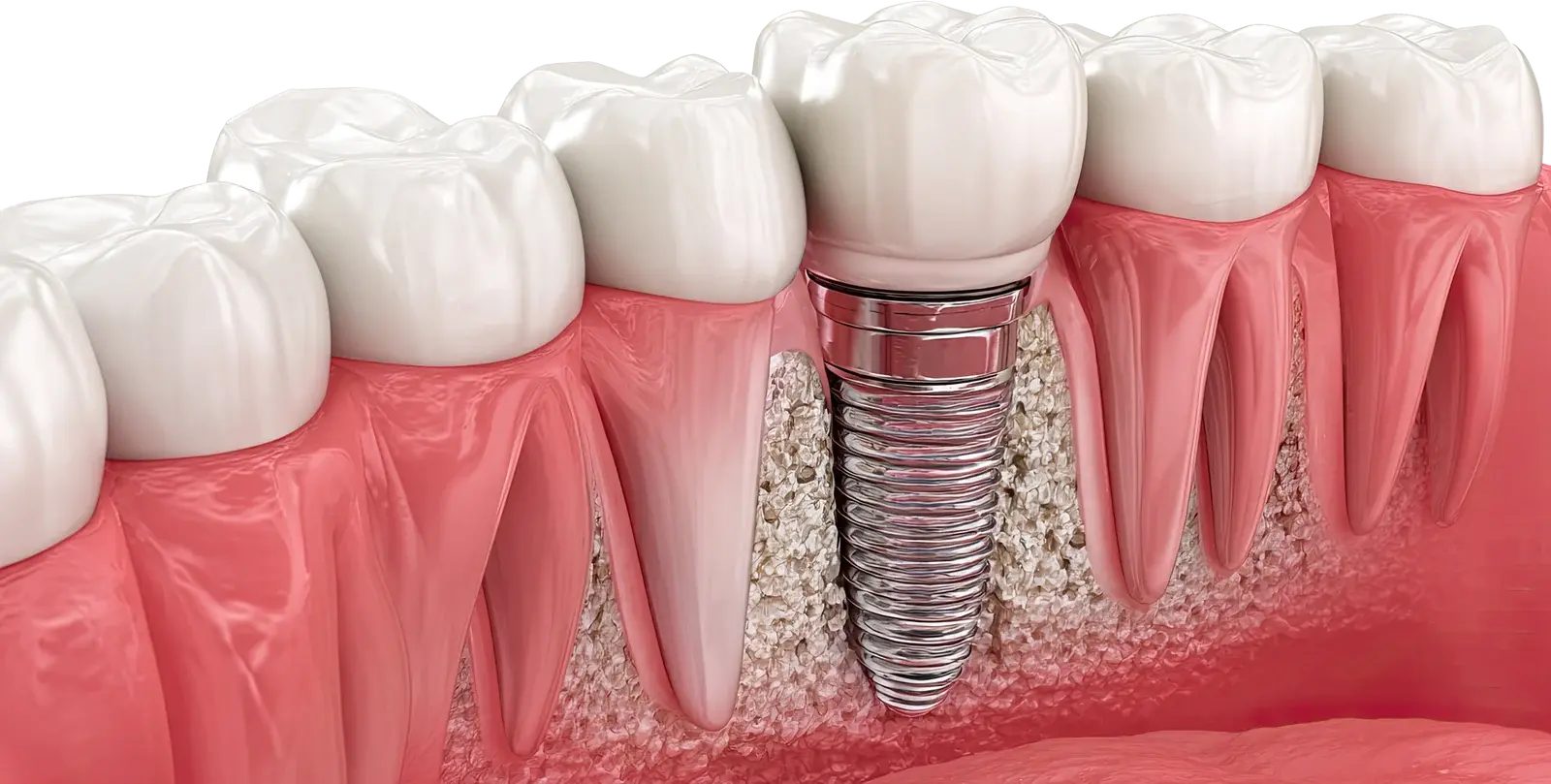
This is the quiet, invisible part of recovery. Underneath the surface, your jawbone is gradually fusing with the titanium implant in a process called osseointegration. There's little to feel or notice during this stage beyond the odd twinge, but it's the single most important part of your recovery, since it's what gives your implant its long-term stability.
Your dentist will see you for follow-up appointments during this period to check healing is progressing as expected. This is also the stage where any additional treatment, such as bone grafting recovery, needs the longest to settle before moving forward.
When Is the Final Crown Fitted?
Once osseointegration is confirmed, usually at the three to six month mark, your dentist fits the abutment and takes impressions for your final crown. This last stage is generally the most straightforward part of the whole process, with the crown fitted and adjusted over one or two short appointments.
Signs You Should Contact Your Dentist
Some discomfort, swelling, and bruising are all a normal part of healing. However, you should get in touch with your dental team if you notice:
- Bleeding that doesn't settle with gentle pressure
- Swelling that's getting worse rather than better after the first three days
- Pain that isn't easing with the pain relief you've been advised to take
- A fever
- Any sense that the implant itself feels loose
None of these are common, but if any of them apply to you, it's always better to check in than to wait it out.
How to Support a Smooth Recovery
- Stick to soft foods for as long as your dentist recommends
- Avoid smoking, which can significantly slow healing and increase the risk of implant failure
- Keep up gentle oral hygiene around the site, even while it's healing
- Attend every follow-up appointment, even if you're feeling completely fine
- Ask questions. If something feels unexpected, it's always worth checking rather than guessing
Once you're through the healing period, our guide to caring for your dental implants long-term covers how to look after them for the years ahead.
Recovery Timelines Vary, and That's Normal
Every patient heals at a slightly different pace. Age, overall health, smoking status, and whether bone grafting was needed all affect how quickly osseointegration completes. If you're wondering whether you're likely to heal quickly or need a longer timeline, our guide on being a good candidate for dental implants covers the factors that influence this.
Questions About Recovery Before You Start Treatment?
Knowing what to expect makes the whole process far less daunting. If you're considering implants and want a realistic, personalised recovery timeline for your case, book a consultation with our team.
Lotus Dental Studio, 13 Llwynhendy Road, Llanelli, SA14 9DP · 01554 774 509