Search for dental implants and you will see a long list of names: endosteal, subperiosteal, zygomatic, mini, all-on-4. It is easy to feel lost before you have even had a consultation.
The good news is that you do not have to choose a type by yourself. Your dentist works it out from your jawbone, your gums and the teeth you are replacing. This guide explains what each term means so the conversation makes sense when you have it.
What are the main types of dental implants?
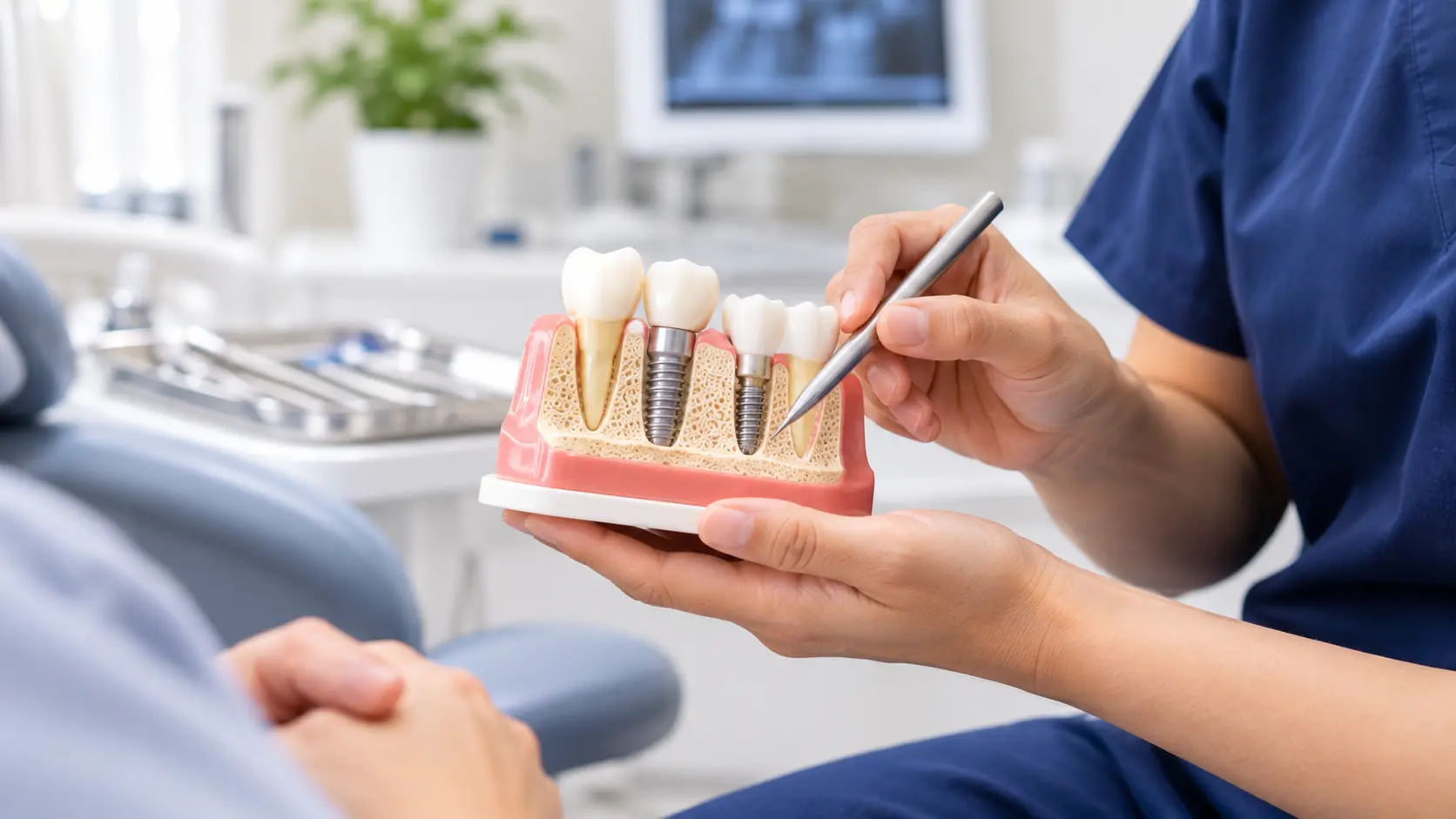
There are three main types, defined by where the implant sits.
Most people who have implants are treated with the first type. The other two are less common and are usually handled by specialists.
What are endosteal implants?
Endosteal implants are placed directly into the jawbone. They are small posts, usually made of titanium, that act as an artificial tooth root. Over the following months the bone grows around the post and holds it firmly in place. A crown is then attached on top.
This is the standard approach for replacing one tooth, several teeth or supporting a bridge, as long as you have enough bone. If you want to see how the process works in practice, this step-by-step guide to what happens during dental implant surgery walks through each stage.
What are subperiosteal implants?
A subperiosteal implant uses a metal frame that sits on top of the jawbone, beneath the gum. Small posts rise through the gum to hold the replacement teeth.
It is an option for some people who do not have enough bone height and cannot have the bone built up. It is used far less often today than endosteal implants, and many dentists will not offer it.
What are zygomatic implants?
Zygomatic implants are much longer. Instead of anchoring in the upper jawbone, they are anchored in the cheekbone. They are reserved for people with severe bone loss in the upper jaw, where standard implants cannot be placed.
This is complex surgery that calls for a highly experienced surgeon. It is not a first choice, and most people will never need it.
What are mini dental implants?
Mini implants are narrower than standard ones. Because they are thinner, they can sometimes be placed where there is less bone and with a simpler procedure.
They are generally used to steady a lower denture rather than to replace a single tooth. Because they are slimmer, they are less suited to areas that take heavy biting force. Whether they are appropriate for you depends on your bone and what you are trying to achieve.
What are dental implants made from?
Most implants are made of titanium. It has been used for many years, bonds well with bone and has a long track record.
Zirconia implants are a ceramic, metal-free alternative. Some patients prefer them because they are tooth-coloured and contain no metal. They have a shorter track record than titanium, and they are not suitable for every situation. If metal is a concern for you, ask your dentist to talk through both options.
What are the options for replacing one tooth or many?
Implant types describe the post. What you need on top depends on how many teeth are missing.
A single tooth
One implant and one crown replace one missing tooth, without involving the teeth either side. This is the most common use. If you are comparing it with a bridge, this overview of implants and bridges compared shows the trade-offs.
Several teeth
A few implants can support a bridge across a longer gap, so you do not need one implant for every missing tooth.
A full arch
When all the teeth in one jaw are missing, a small number of implants can support a full set of teeth. These can be fixed in place or clip onto the implants so they can be removed for cleaning. Systems like all-on-4 are a well-known example of this idea. If you currently wear dentures, this comparison of dentures or dental implants explains what changes.
What is the difference between immediate and delayed implants?
Timing is a separate question from type. With a delayed approach, the implant is placed and left to heal for a few months before the final teeth are fitted. With an immediate approach, a temporary tooth may be fitted on or soon after the day of surgery.
Immediate options are not suitable for everyone. They depend on good bone, healthy gums and enough stability when the implant is placed. Your dentist will tell you whether it is safe for you, and it is worth asking what the plan would be if conditions are not right on the day.
How do you know which type is right for you?
Your dentist will look at several things:
- How much healthy bone you have, usually checked on a 3D scan
- The health of your gums
- How many teeth are missing and where
- Your general health, including smoking and conditions such as diabetes
- What you want from the result, including budget and how long you can wait
This is why a consultation matters more than any article. If you want to know what is checked, this explanation of whether you are a suitable candidate covers it.
What questions should you ask at your consultation?
Take a short list with you:
- Which type do you recommend for me, and why?
- What are the other options, and what are their drawbacks?
- Do I need any preparation, such as treatment for the gums or bone?
- What material will the implant be made from?
- How long will the whole process take, and what will I have in the meantime?
- What is the full cost, and what does it include?
You can compare prices once you have a plan. The dental implants cost in Wales breakdown explains what is usually included, and the fees page lists current prices.
Ready to find out which option suits you?
A consultation is the quickest way to move from a list of names to a clear plan. You can read more about implant treatment at the practice, or book a consultation to talk it through with the team. Once treatment is finished, this advice on looking after implants long term will help them last.
Lotus Dental Studio, 13 Llwynhendy Road, Llanelli, SA14 9DP · 01554 774 509